The Conference Receipt: What Your Industry Events Actually Cost Per Useful Idea
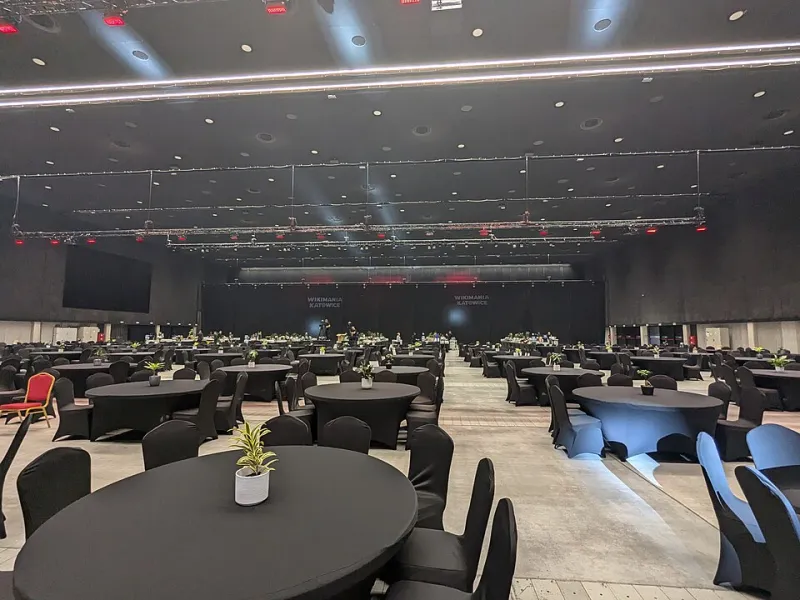
Photo: Hannah Clover, CC BY 4.0, via Wikimedia Commons
Every October, thousands of small business owners across the United States board flights to Las Vegas, Orlando, or Chicago for their industry's annual trade show. They return with tote bags, a stack of scanned business cards, and a warm sense of having invested in themselves. Four months later, most cannot name a single decision those events changed.
This is not an argument against learning from peers. It is an argument against confusing presence with progress — a confusion the professional events industry has every incentive to encourage.
The Currency of Feeling Informed
Conferences sell a particular sensation: the feeling of being at the center of your industry's conversation. Keynotes sketch the trends. Panel discussions rehearse the debates. Roundtable sessions let you nod along with people facing similar pressures. It is genuinely pleasant, and the pleasantness is precisely the problem.
Real strategic insight is usually uncomfortable. It arrives as a challenge to something you believe, not as validation of it. If you left last year's conference with your assumptions fully intact and your to-do list unchanged, you did not attend an event. You attended a very expensive pep rally.
Consider the pattern familiar to anyone who has run a growing company: the owner who attends the same regional trade show every spring, books the same hotel, has lunch with the same three distributors, and returns to describe the trip as "invaluable." Ask what changed because of it, and the answer is a pause, then a story about a conversation that might lead somewhere someday. Might is doing a great deal of work in that sentence.
Calculating Cost Per Insight
There is a simple exercise that reframes the entire question. Before registering for any event, write down three specific questions your business genuinely needs answered — not general themes, but decisions pending on your desk. A pricing question. A hiring question. A question about whether a product line deserves another year.
After the event, score each question: answered, partially informed, or untouched. Then do the arithmetic honestly. A national conference routinely costs $3,000 to $5,000 all-in once you add registration, airfare, hotels, and two to three days away from operations. If one question moved meaningfully, you paid several thousand dollars for one insight — which may be a bargain. If zero questions moved, you paid that amount for the tote bag.
Apply the same test to the smaller recurring commitments. A monthly peer roundtable costs perhaps half a day plus membership dues. Over a year, that is real money and, more scarce, real attention. The question is never whether the group is pleasant. It is whether the group has changed any of your decisions in the past twelve months.
Signal, Ritual, and Networking Theater
Not all professional gatherings are equal, and it is worth distinguishing three types.
Working events are built around a problem. A two-day workshop where you leave with a drafted pricing model, or a supplier fair where you negotiate terms face to face, converts time directly into outcomes. These usually pass the cost-per-insight test.
Signal events are worth attending selectively because the industry's direction is genuinely decided there — a regulatory briefing before a major rule change, or the trade show where your largest competitor is quietly courting your distributors. Attend with a mission, not a badge.
Ritual events are the ones to interrogate. They are attended because they have always been attended. The content repeats every eighteen months, the networking recycles the same contacts, and the primary product is belonging. There is nothing wrong with belonging, but it should be priced as a social expense, not booked in your head as professional development.
The tell for ritual is repeatability. If you can predict next year's sessions from this year's program, you are not gathering intelligence. You are renewing a subscription to your own habits.
A Modest Proposal for the Calendar
None of this requires quitting conferences. It requires treating event attendance the way you would treat any other vendor: with a renewal decision, an expected return, and the willingness to walk away.
Try this for one year. Cap attendance at two events, chosen against the three-question test. Redirect the remainder of the budget toward something with a shorter feedback loop — a competent consultant for a day on a specific problem, a structured visit to a non-competing business in another industry, or simply a full week of undisturbed work on the decision you have been postponing. Most owners discover that the postponed decision was worth more than three keynotes.
The competitors you worry about are not the ones in the convention center ballroom. They are the ones who stayed home, did the unglamorous work, and let you keep the tote bags.
Attendance is easy to justify and hard to audit, which is exactly why it survives on so many calendars. Audit yours. The receipt will tell you the truth.